News & Insights
STC’s Tegan French Receives NASA Exceptional
Public Achievement Medal
Science and Technology Corporation (STC) is proud to recognize Tegan French for receiving NASA’s Exceptional Public Achievement Medal in honor of her outstanding contributions to mission success at NASA Armstrong Flight Research Center.
Tegan, a meteorologist supporting AFRC, has been described by NASA leadership as the “unsung hero” of the Center’s meteorology group. For more than seven years, she has served as the team’s primary expert in weather instrumentation, mentoring colleagues and leading the operation, programming, maintenance, and calibration of an extensive array of atmospheric sensors critical to flight test and research missions.
Her work has directly supported numerous high-visibility NASA projects by ensuring reliable, real-time and post-processed weather measurements essential for mission safety and success. Beyond her core meteorological responsibilities, Tegan took on a far broader challenge: cybersecurity.
Recognizing vulnerabilities in legacy meteorological systems, Tegan stepped into the demanding roles of Information System Security Officer and later Information System
Security Engineer. She successfully bridged the gap between IT security and atmospheric science, bringing 99 meteorological devices, many of them specialized IoT systems, into NASA’s cybersecurity framework. Through creative mitigations and risk-based solutions, she enabled full compliance with federal security requirements while minimizing operational impact.
Thanks largely to Tegan’s leadership and persistence, the meteorology group achieved one of NASA’s first fully compliant (“all green”) security plans, raising its cybersecurity standing from roughly 40% to full compliance and contributing to AFRC earning one of the highest cybersecurity health scores in the Agency.
This achievement reflects not only technical excellence, but also Tegan’s commitment to teamwork, mentorship, and mission success across NASA’s aeronautics and science portfolios.
STC congratulates Tegan French on this well-deserved national recognition. Her dedication, innovation, and willingness to go above and beyond exemplify the very best of our workforce and underscore the vital role STC employees play in advancing NASA’s mission every day.
STC’s Matthew Bandel Receives Excellence
in Data Science and Integrity Award
STC is pleased to announce that Matthew Bandel has received the Excellence in Data Science and Integrity Award from NASA GSFC Code 610AT in recognition of his outstanding contributions to NASA Earth science missions. Over the past year, Matthew has played a critical role in ensuring the integrity and continuity of data from the Ozone Monitoring Instrument (OMI) aboard NASA’s Aura satellite. As instrument monitoring transitioned from the Royal Netherlands Meteorological Institute (KNMI) to NASA, he rapidly developed a robust suite of tools to track the health and performance of the aging instrument, providing essential monitoring as Aura continues to drift. His regular performance assessments have become indispensable to both U.S. and KNMI science teams.
Matthew also assumed a pivotal role in Gross Primary Production (GPP) research following the deferred retirement of NASA Principal Investigator Dr. Joanna Joiner. Working independently, he completed the final development of the next-generation MODIS GPP product and pioneered the first direct hourly GPP product from the TEMPO geostationary mission. By applying AI and machine learning techniques, this work delivers unprecedented insight into diurnal photosynthesis while reducing data gaps from clouds and aerosols. His efforts exemplify scientific excellence, innovation, and leadership in support of NASA’s Earth science mission.
International Report Unveils the Global Atmospheric Impacts
of the 2022 Hunga Volcano Eruption
WCRP – The Hunga Volcanic Eruption Atmospheric Impacts Report, a landmark international scientific assessment, has been released today under the Atmospheric Processes and their Role in Climate (APARC) project of the World Climate Research Programme (WCRP).
The report provides a comprehensive analysis of the atmospheric effects of the 15 January 2022 eruption of the Hunga volcano, the most explosive event of the satellite era. Combining unprecedented satellite, balloon, and ground-based observations with global modeling studies, the report documents the eruption’s far-reaching effects on the stratosphere, climate, and ozone.

An Unprecedented Scientific Collaboration
Launched in late 2022, the Hunga assessment report brought together 159 scientists from 21 countries, coordinated by Co-Chairs Dr. Yunqian Zhu (University of Colorado, CIRES), Dr. William Randel (NCAR), Dr. Graham Mann (University of Leeds), and Dr. Paul A. Newman (University of Maryland, Baltimore County).
The report’s seven chapters synthesize findings from observations, data analyses, and climate model simulations, including contributions from the Hunga Tonga–Hunga Haʻapai Impact Model Observation Comparison (HTHH-MOC) project—an international modeling effort involving more than ten global climate models. The chapters include basic eruption information, the Hunga cloud evolution on both short (less than 1-month) and multi-year time scales, impacts on atmospheric chemistry and dynamics, the stratospheric ozone layer, upper altitude effects, and surface radiative and temperature effects.
Key Scientific Findings
The 2022 Hunga eruption, a high-magnitude (volcanic explosivity index of 6) submarine explosion, was unique in injecting vast quantities of water vapor into the stratosphere—increasing global stratospheric water by about 10%, much of which remains in the atmosphere through 2025. Unlike past eruptions that caused stratospheric warming, Hunga’s water vapor led to 0.5–1 K cooling of the mid-to-upper stratosphere and over 1 K in the mesosphere.
While the eruption perturbed stratospheric ozone in the Southern Hemisphere in the months following the eruption, its overall effects on the Antarctic ozone hole and surface climate were minor.
The report emphasizes that record-high global temperatures in 2023–2024 were not caused by the eruption. Model simulations indicate that Hunga’s surface cooling influence—about 0.05 K—was indistinguishable from natural climate variability.
A Legacy of Observation and Global Cooperation
The report underscores how decades of international investment in atmospheric observation networks enabled the rapid and detailed tracking of Hunga’s plume. Instruments on NASA, NOAA, ESA, CNES, and JAXA satellites, as well as balloon campaigns and ground networks, captured the evolution of volcanic aerosols, water vapor, and trace gases from minutes after the eruption through subsequent years to the present.
The report warns, however, that future observational gaps—from potential satellite mission cancellations or aging networks—could severely limit the world’s ability to monitor and understand similar major events.
Towards Future Assessments
The Hunga Volcanic Eruption Atmospheric Impacts Report was developed as a three-year APARC activity (2023–2025), designed to precede the UNEP/WMO Scientific Assessment of Ozone Depletion: 2026. The findings provide a crucial reference for understanding volcanic impacts on the atmosphere and climate system in a warming world, and for judging our ability to model these effects.
“Despite the significant perturbation of the stratosphere, Hunga had almost no impact on the climate even though there had been speculation that Hunga was behind the extraordinary warming in 2023/2024.” said Dr. Schoeberl. “The potential climate warming due to increased Hunga stratospheric water vapor was cancelled by the cooling associated with the Hunga volcanic aerosol layer.”
The supporting datasets, including the HTHH-MOC simulations, will be publicly available through the Centre for Environmental Data Analysis (CEDA). The full report is available from the APARC and WCRP web sites.
STC Chief Scientist Dr. M. Schoeberl contributed to the report; he was Co-Chair of Chapter 7, “Radiative forcing and climate impacts caused by the 2022 Hunga volcano eruption.” STC sponsored his travel and work on the final document.
STC RF Spectrum Team Represents NOAA at ITU-R Meetings
The ITU-R plays a vital role in regulating and coordinating the world’s radio frequency spectrum and satellite orbit resources. By actively participating in these working party meetings, STC’s RF Spectrum Team helps protect NOAA’s mission-critical assets and supports the global advancement of Earth observation and meteorological satellite services.
Our team ensures NOAA’s passive sensing instruments remain free from harmful radio frequency interference—instrumentation essential to environmental forecasting and climate monitoring. This includes safeguarding the Advanced Technology Microwave Sounder (ATMS), currently operating on Suomi NPP, NOAA-20, NOAA-21, and QuickSounder, the first small satellite in NOAA’s Near Earth Orbit Network (NEON).
STC is proud to contribute to the international collaboration that drives accurate weather prediction, environmental monitoring, and the long-term protection of critical Earth observation systems.
STC Supports Major Milestones Across NASA Centers
STC teams across NASA centers continue to demonstrate exceptional technical expertise, on-time delivery, and mission-driven support. Recent accomplishments highlight our role in advancing key NASA programs.
Human Landing System (HLS) – NASA Langley Research Center
STC successfully completed all gantry modifications in support of NASA’s Human Landing System (HLS) program. Our fabrication team delivered every component 100% on schedule, reinforcing our commitment to precision, reliability, and mission readiness.
X-59 First Flight Support – NASA Armstrong Flight Research Center
STC personnel played a crucial role in the development and preparation of NASA’s experimental X-59 quiet supersonic aircraft.
On October 28, the X-59 achieved a major program milestone with its successful first flight—an achievement celebrated across Armstrong and supported by STC’s technical contributions.
STC Wins NASA Goddard ATMOS Contract
STC is proud to announce its award of the Atmosphere Support (ATMOS) contract with NASA’s Goddard Space Flight Center’s Earth Science Division. Through ATMOS, STC will deliver cutting-edge scientific, engineering, and programmatic support that advances atmospheric science, modeling & observations, and climate research.
NASA Goddard’s Atmospheres science directorate is home to world-class laboratories that investigate the dynamics, chemistry, and radiation of Earth’s atmosphere. These include the Atmospheric Chemistry and Dynamics Laboratory, which studies ozone, air quality, and the impacts of climate change; the Climate and Radiation Laboratory, which examines Earth’s climate across timescales using integrated observations and modeling; and the Mesoscale Atmospheric Processes Laboratory, which explores clouds, storms, and precipitation while developing advanced remote-sensing instruments. Together, these labs provide critical insights into Earth’s atmosphere and its role in shaping our planet’s future.
STC’s winning team—joined by ADNET Systems Inc., Astralis Technologies, and Analytical Services and Materials, Inc. (AS&M)—brings exceptional staff, proven leadership, and a shared commitment to innovation, transparency, and workforce development. This strong partnership ensures NASA receives the highest level of support in advancing its mission to better understand Earth’s atmosphere and environment.
STC Recognized with NOAA NESDIS Outstanding Science and Research Team Member Award
STC is proud to congratulate Dr. Laura McBride, Project Manager, for her role in the Typical Meteorological Year (TMY) development team, recently honored with NOAA’s 2025 NESDIS Outstanding Science and Research Team Member Award.
Working alongside colleagues from Riverside Technology, Deloitte, and ISciences, L.L.C., Dr. McBride and the team combined historical TMY data with climate projections to generate a future-focused TMY dataset. This first-of-its-kind product was developed to meet the needs of the American Society of Civil Engineers and is already being used by architecture and engineering professionals to inform building codes nationwide.
The Climate Sciences and Services Division ensured the product met rigorous Continuous Integration/Continuous Delivery standards, enabling a smooth transition to the Cloud. Its rapid adoption across industries highlights both the demand for such data and the innovation behind its creation.
This award underscores the impact of collaborative science and the value of developing practical, forward-looking solutions to support resilience in the face of climate change.
STC Awarded NASA Langley MCHFSS II Contract
STC is proud to announce its selection for the Mechanical Composites Hardware Fabrication Support Services II (MCHFSS II) contract with NASA’s Langley Research Center, beginning October 1st, 2025. This prestigious follow-on award extends a partnership that spans more than two decades.
Under MCHFSS II, STC’s team of over 25 skilled machinists, welders, composite fabricators, and technicians will provide specialized fabrication services in support of NASA’s most advanced aerospace programs. These include the Human Landing System (HLS), Artemis spacesuit development, and hypersonic research facilities—projects that demand precision capabilities not available through standard commercial channels.
This contract reinforces STC’s position as NASA’s trusted partner for solving the most demanding fabrication challenges in aerospace research and development. Our proven expertise and commitment to innovation will ensure that NASA continues to have the cutting-edge mechanical and composite hardware essential for future exploration and scientific discovery.
STC Showcases Innovation at SciPy 2025
Their presentations highlighted STC’s collaborative work with NOAA’s National Center for Environmental Information (NCEI) and our partners, Riverside, to deliver environmental products that help industries adapt to changing weather and climate.
STC is excited to recognize Brodie Vidrine, Software Engineer, and Dr. Laura McBride, Project Manager, for representing our team at the 24th Annual SciPy Conference in Tacoma, Washington.
- Brodie Vidrine presented “Breaking Out of the Loop: Refactoring Legacy Software with Polars,” showcasing new approaches to modernizing and streamlining legacy code.
- Dr. McBride presented her poster, “Chillin’ with Polars: Building NCEI Products Faster with Python,” demonstrating innovative applications of Python tools to accelerate product development.
Through these efforts, STC continues to advance open-source science, improve environmental data products, and support industry and community resilience.
STC Supports Satellites Hackathon
STC is proud to help inspire the next generation of satellite data users by supporting the planning and implementation of a Satellites Hackathon — a virtual competition engaging undergraduate and graduate students worldwide. Participants were challenged to create a public awareness campaign on an environmental hazard using Earth and space-based satellite data.
The winning team addressed the challenge of harmful algal blooms (HABs), aiming to improve preparedness by identifying when and where HABs occur. Their solution, HABHub, is a monitoring and forecasting tool designed for aquaculture managers, recreational ocean users, and marine mammal care teams. HABHub integrates sea surface temperature and chlorophyll-A satellite products, ocean buoy data, and plankton and toxin measurements from the CalHABMAP Portal. Using these inputs within a machine learning model powered by extreme gradient boosting, the team achieved over 85% accuracy for HAB detection and over 86% accuracy for 8-day forecasts. These insights are delivered through a user-friendly dashboard that displays current and predicted HAB conditions and provides guidance tailored to different user communities.
STC personnel Katherine Pitts, Sherrie Morris, and Gary McWilliams led the planning and execution of this educational event and hosted all live sessions. Their efforts — combined with hands-on training, mentorship from remote sensing scientists, and spirited competition — helped equip emerging data scientists with the skills and inspiration to pursue careers in satellite remote sensing.
STC Engineer Honored for Contirubtions to NASA’s Roman Space Telescope
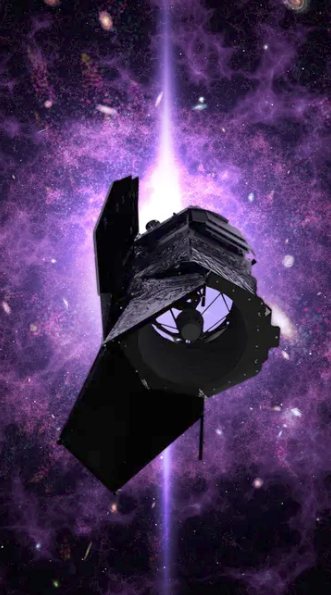
NASA’s Nancy Grace Roman Space Telescope is designed to unlock a deeper understanding of the universe by investigating dark energy, discovering distant exoplanets, and capturing unprecedented wide-field images of the cosmos. As one of NASA’s flagship astrophysics missions, Roman brings together elite engineering and scientific teams to deliver the next generation of space-based observatories and transform our cosmic perspective.
STC is proud to recognize Sean Fitzsimmons, who was recently honored by NASA with a Certificate of Accomplishment for his outstanding dedication, expertise, and commitment to excellence on the Roman Space Telescope program. As cited in the award, Sean’s unwavering efforts have played a pivotal role in advancing Roman’s mission, particularly through his exceptional work on the Deployment & Propulsion Electronics. His technical skill, professionalism, and problem-solving approach have helped propel the mission forward and ensured robust, reliable systems at a critical phase of development. Sean’s contributions exemplify STC’s core values and reflect the impact that talented engineers bring to NASA’s most ambitious space exploration missions.